
'%3e%3cellipse%20cx='122.857'%20cy='358.884'%20rx='122.857'%20ry='358.884'%20transform='matrix(0.213985%20-0.976837%200.999853%200.0171202%20106%20414.739)'%20fill='%23C07EF4'%20fill-opacity='0.65'/%3e%3c/g%3e%3cg%20opacity='0.6'%20filter='url(%23filter1_f_179_19713)'%3e%3cellipse%20cx='102.943'%20cy='194.258'%20rx='102.943'%20ry='194.258'%20transform='matrix(0.999918%20-0.0128009%20-0.182066%200.983286%20344.224%2090.6355)'%20fill='url(%23paint0_linear_179_19713)'/%3e%3c/g%3e%3cg%20opacity='0.6'%20filter='url(%23filter2_f_179_19713)'%3e%3cellipse%20cx='58.3778'%20cy='110.161'%20rx='58.3778'%20ry='110.161'%20transform='matrix(0.999918%20-0.0128009%20-0.182066%200.983286%20373.476%20172.757)'%20fill='url(%23paint1_linear_179_19713)'%20fill-opacity='0.6'/%3e%3c/g%3e%3cdefs%3e%3cfilter%20id='filter0_f_179_19713'%20x='0.299316'%20y='49.6877'%20width='981.644'%20height='502.367'%20filterUnits='userSpaceOnUse'%20color-interpolation-filters='sRGB'%3e%3cfeFlood%20flood-opacity='0'%20result='BackgroundImageFix'/%3e%3cfeBlend%20mode='normal'%20in='SourceGraphic'%20in2='BackgroundImageFix'%20result='shape'/%3e%3cfeGaussianBlur%20stdDeviation='65.5061'%20result='effect1_foregroundBlur_179_19713'/%3e%3c/filter%3e%3cfilter%20id='filter1_f_179_19713'%20x='214.438'%20y='0.83107'%20width='394.707'%20height='558.997'%20filterUnits='userSpaceOnUse'%20color-interpolation-filters='sRGB'%3e%3cfeFlood%20flood-opacity='0'%20result='BackgroundImageFix'/%3e%3cfeBlend%20mode='normal'%20in='SourceGraphic'%20in2='BackgroundImageFix'%20result='shape'/%3e%3cfeGaussianBlur%20stdDeviation='44.241'%20result='effect1_foregroundBlur_179_19713'/%3e%3c/filter%3e%3cfilter%20id='filter2_f_179_19713'%20x='301.482'%20y='123.437'%20width='220.619'%20height='313.787'%20filterUnits='userSpaceOnUse'%20color-interpolation-filters='sRGB'%3e%3cfeFlood%20flood-opacity='0'%20result='BackgroundImageFix'/%3e%3cfeBlend%20mode='normal'%20in='SourceGraphic'%20in2='BackgroundImageFix'%20result='shape'/%3e%3cfeGaussianBlur%20stdDeviation='24.2852'%20result='effect1_foregroundBlur_179_19713'/%3e%3c/filter%3e%3clinearGradient%20id='paint0_linear_179_19713'%20x1='102.943'%20y1='0'%20x2='138.749'%20y2='364.251'%20gradientUnits='userSpaceOnUse'%3e%3cstop%20stop-color='%23DF4E94'/%3e%3cstop%20offset='1'%20stop-color='%23FF74B7'/%3e%3c/linearGradient%3e%3clinearGradient%20id='paint1_linear_179_19713'%20x1='79.5736'%20y1='-21.7109'%20x2='87.7798'%20y2='224.984'%20gradientUnits='userSpaceOnUse'%3e%3cstop%20stop-color='%23E76A9E'%20stop-opacity='0.8'/%3e%3cstop%20offset='0.387309'%20stop-color='%23F2AD27'%20stop-opacity='0.8'/%3e%3cstop%20offset='0.843356'%20stop-color='%23FF8D4E'%20stop-opacity='0.82'/%3e%3cstop%20offset='1'%20stop-color='%23ED258A'%20stop-opacity='0.37'/%3e%3c/linearGradient%3e%3c/defs%3e%3c/svg%3e)
'%3e%3cellipse%20cx='605.327'%20cy='687.991'%20rx='214.134'%20ry='588.997'%20transform='rotate(37.9938%20605.327%20687.991)'%20fill='url(%23paint0_linear_179_19720)'/%3e%3c/g%3e%3cg%20opacity='0.5'%20filter='url(%23filter1_f_179_19720)'%3e%3cellipse%20cx='746.016'%20cy='777.643'%20rx='72.6077'%20ry='352.172'%20transform='rotate(-15%20746.016%20777.643)'%20fill='%23FFE1E1'/%3e%3c/g%3e%3cdefs%3e%3cfilter%20id='filter0_f_179_19720'%20x='0.930389'%20y='0.959198'%20width='1208.79'%20height='1374.06'%20filterUnits='userSpaceOnUse'%20color-interpolation-filters='sRGB'%3e%3cfeFlood%20flood-opacity='0'%20result='BackgroundImageFix'/%3e%3cfeBlend%20mode='normal'%20in='SourceGraphic'%20in2='BackgroundImageFix'%20result='shape'/%3e%3cfeGaussianBlur%20stdDeviation='102.19'%20result='effect1_foregroundBlur_179_19720'/%3e%3c/filter%3e%3cfilter%20id='filter1_f_179_19720'%20x='538.382'%20y='344.322'%20width='415.267'%20height='866.64'%20filterUnits='userSpaceOnUse'%20color-interpolation-filters='sRGB'%3e%3cfeFlood%20flood-opacity='0'%20result='BackgroundImageFix'/%3e%3cfeBlend%20mode='normal'%20in='SourceGraphic'%20in2='BackgroundImageFix'%20result='shape'/%3e%3cfeGaussianBlur%20stdDeviation='46.31'%20result='effect1_foregroundBlur_179_19720'/%3e%3c/filter%3e%3clinearGradient%20id='paint0_linear_179_19720'%20x1='819.46'%20y1='98.9937'%20x2='391.193'%20y2='98.9937'%20gradientUnits='userSpaceOnUse'%3e%3cstop%20stop-color='%2300E0EE'/%3e%3cstop%20offset='1'%20stop-color='%23AD00FE'/%3e%3c/linearGradient%3e%3c/defs%3e%3c/svg%3e)
'%3e%3cellipse%20cx='576.369'%20cy='647.951'%20rx='214.134'%20ry='536.944'%20transform='rotate(37.9938%20576.369%20647.951)'%20fill='url(%23paint0_linear_55_3438)'/%3e%3c/g%3e%3cg%20opacity='0.5'%20filter='url(%23filter1_f_55_3438)'%3e%3cellipse%20cx='685.016'%20cy='778.624'%20rx='72.6077'%20ry='352.172'%20transform='rotate(-15%20685.016%20778.624)'%20fill='%23EED4D4'/%3e%3c/g%3e%3cdefs%3e%3cfilter%20id='filter0_f_55_3438'%20x='0.793915'%20y='0.24411'%20width='1151.15'%20height='1295.41'%20filterUnits='userSpaceOnUse'%20color-interpolation-filters='sRGB'%3e%3cfeFlood%20flood-opacity='0'%20result='BackgroundImageFix'/%3e%3cfeBlend%20mode='normal'%20in='SourceGraphic'%20in2='BackgroundImageFix'%20result='shape'/%3e%3cfeGaussianBlur%20stdDeviation='102.19'%20result='effect1_foregroundBlur_55_3438'/%3e%3c/filter%3e%3cfilter%20id='filter1_f_55_3438'%20x='477.382'%20y='345.304'%20width='415.268'%20height='866.64'%20filterUnits='userSpaceOnUse'%20color-interpolation-filters='sRGB'%3e%3cfeFlood%20flood-opacity='0'%20result='BackgroundImageFix'/%3e%3cfeBlend%20mode='normal'%20in='SourceGraphic'%20in2='BackgroundImageFix'%20result='shape'/%3e%3cfeGaussianBlur%20stdDeviation='46.31'%20result='effect1_foregroundBlur_55_3438'/%3e%3c/filter%3e%3clinearGradient%20id='paint0_linear_55_3438'%20x1='790.503'%20y1='111.006'%20x2='362.235'%20y2='111.006'%20gradientUnits='userSpaceOnUse'%3e%3cstop%20stop-color='%23AD00FE'/%3e%3cstop%20offset='1'%20stop-color='%2300E0EE'/%3e%3c/linearGradient%3e%3c/defs%3e%3c/svg%3e)
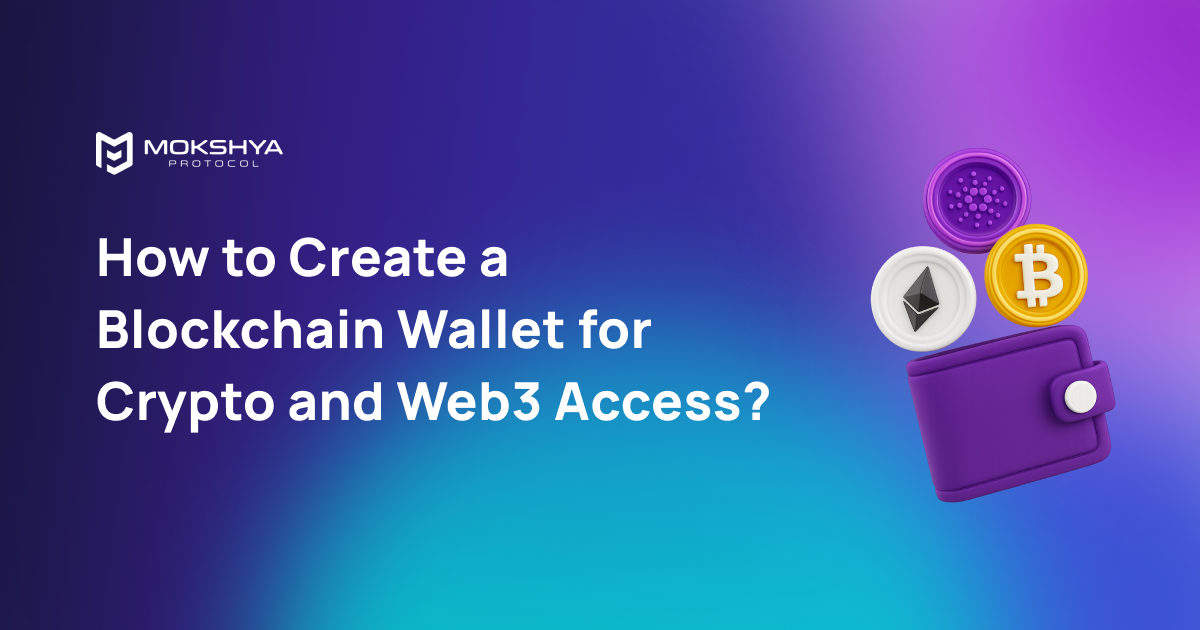
Cryptocurrency and blockchain technology are changing how people store, send, and manage digital assets. To access this digital economy, users need a blockchain wallet. A blockchain wallet allows users to securely store digital assets and manage blockchain transactions. It works like a digital gateway that connects users to blockchain networks and decentralized applications. As Web3 adoption continues to grow, understanding how to create a blockchain wallet has become important for beginners, developers, and crypto users alike.
In this guide, you will learn what a blockchain wallet is, why it is important, and how to create a blockchain wallet step by step, securely and simply.
What Do You Mean by Blockchain Wallet?
A blockchain wallet is a digital tool that allows users to store, send, and receive cryptocurrencies and other digital assets on a blockchain network. It does not physically store coins or tokens. Instead, it stores cryptographic keys that give you access to your assets on the blockchain. These keys include a public key and a private key, which work together to verify ownership and secure transactions. Every action you take, such as sending or receiving crypto, is recorded on the blockchain and linked to your wallet address. A crypto wallet serves as the gateway to managing and accessing these digital assets securely.
A blockchain wallet acts like your digital identity in the crypto world. The public key works like your wallet address, which you can share with others to receive funds. The private key works like a secret password that gives you full control over your assets. If someone gains access to your private key, they can control your funds, which is why security is extremely important. Blockchain wallets also allow users to interact with decentralized applications, DeFi platforms, and NFT marketplaces, making them a core part of the Web3 ecosystem.
Why Do We Need a Blockchain Wallet?
We need a blockchain wallet to store digital assets securely, send and receive cryptocurrency, buy, store, and trade NFTs, and connect with Web3 applications.
Store Digital Assets Securely
A blockchain wallet lets you store cryptocurrencies in a secure and decentralized way. Instead of depending on banks or third-party services, you directly control your private keys. This means only you can access and manage your funds. This level of control improves security and reduces the risk of censorship or account restrictions when compared to traditional financial systems.
Send and Receive Cryptocurrency
A blockchain wallet allows you to send and receive cryptocurrencies instantly across the globe. You do not need intermediaries like banks or payment processors. Transactions happen directly between wallets on the blockchain, making the process faster, borderless, and available 24/7. You only need the correct wallet address to transfer funds safely.
Access DeFi Platforms
A blockchain wallet is required to interact with decentralized finance (DeFi) platforms. It allows you to connect to protocols where you can lend, borrow, stake, and earn rewards on your crypto assets. Some advanced solutions, such as a smart contract wallet, offer additional features like automated transactions, enhanced security controls, and flexible account recovery options. These platforms operate without traditional banks, giving users more financial freedom and control over their investments.
Buy, Store, and Trade NFTs
Blockchain wallets enable users to engage with NFT marketplaces. You can store digital collectibles, artwork, and in-game assets securely in your wallet. It also allows you to buy, sell, and trade NFTs directly on supported platforms, giving you ownership of unique digital items verified on the blockchain.
Connect With Web3 Applications
A blockchain wallet acts as your identity in the Web3 ecosystem. It allows you to log in and interact with decentralized applications such as blockchain games, DeFi platforms, and social apps. Instead of usernames and passwords, your wallet provides secure authentication and seamless access to the decentralized internet.
How Can We Create a Blockchain Wallet?
Creating a blockchain wallet is a simple process, but it requires careful attention to security. Below is a clear step-by-step guide to help you create your own blockchain wallet.
Step 1: Choose the Right Wallet Type
Start by selecting the type of wallet that fits your needs. You can choose between hot wallets (online and easy to use) or cold wallets (offline and more secure). Beginners often start with mobile or web wallets, while advanced users may prefer hardware wallets for better security.
Step 2: Select a Trusted Wallet Provider
Next, choose a reliable wallet provider with a strong reputation in the crypto space. Always look for security features, user reviews, and community trust. A trusted provider reduces the risk of scams and ensures better protection for your assets.
Step 3: Download and Install the Wallet
Once you choose a provider, download the official wallet application from a verified source such as an official website or app store. Avoid third-party links to prevent fake or malicious software. Install the wallet on your device and open the application.
Step 4: Create a New Wallet Account
After installation, create a new wallet account. The system will generate a unique wallet address and cryptographic keys for you. This address will be used to receive cryptocurrencies from others on the blockchain network.
Step 5: Save Your Recovery Phrase Securely
Your recovery phrase (also called seed phrase) is the most important part of your wallet. It is a set of words that can restore your wallet if you lose access. Write it down and store it offline in a safe place. Never share it with anyone.
Step 6: Set a Strong Password
Create a strong password to protect access to your wallet application. Use a combination of letters, numbers, and symbols. A strong password adds an extra layer of security to your digital assets.
Step 7: Add Cryptocurrency to Your Wallet
After setting up your wallet, you can add cryptocurrency by receiving funds from another wallet or purchasing crypto through supported platforms. Always double-check the wallet address before sending or receiving funds.
Step 8: Start Using Your Blockchain Wallet
Once your wallet is set up and funded, you can start using it for transactions. You can send and receive crypto, connect to decentralized applications, and explore the Web3 ecosystem securely.
Conclusion
A blockchain wallet is a fundamental requirement for anyone who wants to enter the world of cryptocurrency and Web3. It provides a secure way to store digital assets, manage transactions, and interact with blockchain networks without relying on centralized authorities. By understanding how wallets work and following proper setup steps, users can protect their private keys, reduce security risks, and gain full control over their digital funds. A well-configured wallet also opens access to a wide range of blockchain-based services such as DeFi platforms, NFT marketplaces, and decentralized applications.
Mokshya Protocol supports this growing ecosystem by offering advanced blockchain development tools, smart contract frameworks, and cross-chain infrastructure. As blockchain adoption continues to grow, the importance of secure wallet usage becomes even more critical. Users must always prioritize security by safeguarding recovery phrases, using trusted wallet providers, and staying alert to potential scams. A properly created blockchain wallet is not just a storage tool; it is the foundation of participation in the decentralized digital economy. Mokshya Protocol helps developers build secure, scalable, and efficient decentralized applications across multiple networks, enabling faster innovation and stronger Web3 adoption worldwide.