
'%3e%3cellipse%20cx='122.857'%20cy='358.884'%20rx='122.857'%20ry='358.884'%20transform='matrix(0.213985%20-0.976837%200.999853%200.0171202%20106%20414.739)'%20fill='%23C07EF4'%20fill-opacity='0.65'/%3e%3c/g%3e%3cg%20opacity='0.6'%20filter='url(%23filter1_f_179_19713)'%3e%3cellipse%20cx='102.943'%20cy='194.258'%20rx='102.943'%20ry='194.258'%20transform='matrix(0.999918%20-0.0128009%20-0.182066%200.983286%20344.224%2090.6355)'%20fill='url(%23paint0_linear_179_19713)'/%3e%3c/g%3e%3cg%20opacity='0.6'%20filter='url(%23filter2_f_179_19713)'%3e%3cellipse%20cx='58.3778'%20cy='110.161'%20rx='58.3778'%20ry='110.161'%20transform='matrix(0.999918%20-0.0128009%20-0.182066%200.983286%20373.476%20172.757)'%20fill='url(%23paint1_linear_179_19713)'%20fill-opacity='0.6'/%3e%3c/g%3e%3cdefs%3e%3cfilter%20id='filter0_f_179_19713'%20x='0.299316'%20y='49.6877'%20width='981.644'%20height='502.367'%20filterUnits='userSpaceOnUse'%20color-interpolation-filters='sRGB'%3e%3cfeFlood%20flood-opacity='0'%20result='BackgroundImageFix'/%3e%3cfeBlend%20mode='normal'%20in='SourceGraphic'%20in2='BackgroundImageFix'%20result='shape'/%3e%3cfeGaussianBlur%20stdDeviation='65.5061'%20result='effect1_foregroundBlur_179_19713'/%3e%3c/filter%3e%3cfilter%20id='filter1_f_179_19713'%20x='214.438'%20y='0.83107'%20width='394.707'%20height='558.997'%20filterUnits='userSpaceOnUse'%20color-interpolation-filters='sRGB'%3e%3cfeFlood%20flood-opacity='0'%20result='BackgroundImageFix'/%3e%3cfeBlend%20mode='normal'%20in='SourceGraphic'%20in2='BackgroundImageFix'%20result='shape'/%3e%3cfeGaussianBlur%20stdDeviation='44.241'%20result='effect1_foregroundBlur_179_19713'/%3e%3c/filter%3e%3cfilter%20id='filter2_f_179_19713'%20x='301.482'%20y='123.437'%20width='220.619'%20height='313.787'%20filterUnits='userSpaceOnUse'%20color-interpolation-filters='sRGB'%3e%3cfeFlood%20flood-opacity='0'%20result='BackgroundImageFix'/%3e%3cfeBlend%20mode='normal'%20in='SourceGraphic'%20in2='BackgroundImageFix'%20result='shape'/%3e%3cfeGaussianBlur%20stdDeviation='24.2852'%20result='effect1_foregroundBlur_179_19713'/%3e%3c/filter%3e%3clinearGradient%20id='paint0_linear_179_19713'%20x1='102.943'%20y1='0'%20x2='138.749'%20y2='364.251'%20gradientUnits='userSpaceOnUse'%3e%3cstop%20stop-color='%23DF4E94'/%3e%3cstop%20offset='1'%20stop-color='%23FF74B7'/%3e%3c/linearGradient%3e%3clinearGradient%20id='paint1_linear_179_19713'%20x1='79.5736'%20y1='-21.7109'%20x2='87.7798'%20y2='224.984'%20gradientUnits='userSpaceOnUse'%3e%3cstop%20stop-color='%23E76A9E'%20stop-opacity='0.8'/%3e%3cstop%20offset='0.387309'%20stop-color='%23F2AD27'%20stop-opacity='0.8'/%3e%3cstop%20offset='0.843356'%20stop-color='%23FF8D4E'%20stop-opacity='0.82'/%3e%3cstop%20offset='1'%20stop-color='%23ED258A'%20stop-opacity='0.37'/%3e%3c/linearGradient%3e%3c/defs%3e%3c/svg%3e)
'%3e%3cellipse%20cx='605.327'%20cy='687.991'%20rx='214.134'%20ry='588.997'%20transform='rotate(37.9938%20605.327%20687.991)'%20fill='url(%23paint0_linear_179_19720)'/%3e%3c/g%3e%3cg%20opacity='0.5'%20filter='url(%23filter1_f_179_19720)'%3e%3cellipse%20cx='746.016'%20cy='777.643'%20rx='72.6077'%20ry='352.172'%20transform='rotate(-15%20746.016%20777.643)'%20fill='%23FFE1E1'/%3e%3c/g%3e%3cdefs%3e%3cfilter%20id='filter0_f_179_19720'%20x='0.930389'%20y='0.959198'%20width='1208.79'%20height='1374.06'%20filterUnits='userSpaceOnUse'%20color-interpolation-filters='sRGB'%3e%3cfeFlood%20flood-opacity='0'%20result='BackgroundImageFix'/%3e%3cfeBlend%20mode='normal'%20in='SourceGraphic'%20in2='BackgroundImageFix'%20result='shape'/%3e%3cfeGaussianBlur%20stdDeviation='102.19'%20result='effect1_foregroundBlur_179_19720'/%3e%3c/filter%3e%3cfilter%20id='filter1_f_179_19720'%20x='538.382'%20y='344.322'%20width='415.267'%20height='866.64'%20filterUnits='userSpaceOnUse'%20color-interpolation-filters='sRGB'%3e%3cfeFlood%20flood-opacity='0'%20result='BackgroundImageFix'/%3e%3cfeBlend%20mode='normal'%20in='SourceGraphic'%20in2='BackgroundImageFix'%20result='shape'/%3e%3cfeGaussianBlur%20stdDeviation='46.31'%20result='effect1_foregroundBlur_179_19720'/%3e%3c/filter%3e%3clinearGradient%20id='paint0_linear_179_19720'%20x1='819.46'%20y1='98.9937'%20x2='391.193'%20y2='98.9937'%20gradientUnits='userSpaceOnUse'%3e%3cstop%20stop-color='%2300E0EE'/%3e%3cstop%20offset='1'%20stop-color='%23AD00FE'/%3e%3c/linearGradient%3e%3c/defs%3e%3c/svg%3e)
'%3e%3cellipse%20cx='576.369'%20cy='647.951'%20rx='214.134'%20ry='536.944'%20transform='rotate(37.9938%20576.369%20647.951)'%20fill='url(%23paint0_linear_55_3438)'/%3e%3c/g%3e%3cg%20opacity='0.5'%20filter='url(%23filter1_f_55_3438)'%3e%3cellipse%20cx='685.016'%20cy='778.624'%20rx='72.6077'%20ry='352.172'%20transform='rotate(-15%20685.016%20778.624)'%20fill='%23EED4D4'/%3e%3c/g%3e%3cdefs%3e%3cfilter%20id='filter0_f_55_3438'%20x='0.793915'%20y='0.24411'%20width='1151.15'%20height='1295.41'%20filterUnits='userSpaceOnUse'%20color-interpolation-filters='sRGB'%3e%3cfeFlood%20flood-opacity='0'%20result='BackgroundImageFix'/%3e%3cfeBlend%20mode='normal'%20in='SourceGraphic'%20in2='BackgroundImageFix'%20result='shape'/%3e%3cfeGaussianBlur%20stdDeviation='102.19'%20result='effect1_foregroundBlur_55_3438'/%3e%3c/filter%3e%3cfilter%20id='filter1_f_55_3438'%20x='477.382'%20y='345.304'%20width='415.268'%20height='866.64'%20filterUnits='userSpaceOnUse'%20color-interpolation-filters='sRGB'%3e%3cfeFlood%20flood-opacity='0'%20result='BackgroundImageFix'/%3e%3cfeBlend%20mode='normal'%20in='SourceGraphic'%20in2='BackgroundImageFix'%20result='shape'/%3e%3cfeGaussianBlur%20stdDeviation='46.31'%20result='effect1_foregroundBlur_55_3438'/%3e%3c/filter%3e%3clinearGradient%20id='paint0_linear_55_3438'%20x1='790.503'%20y1='111.006'%20x2='362.235'%20y2='111.006'%20gradientUnits='userSpaceOnUse'%3e%3cstop%20stop-color='%23AD00FE'/%3e%3cstop%20offset='1'%20stop-color='%2300E0EE'/%3e%3c/linearGradient%3e%3c/defs%3e%3c/svg%3e)
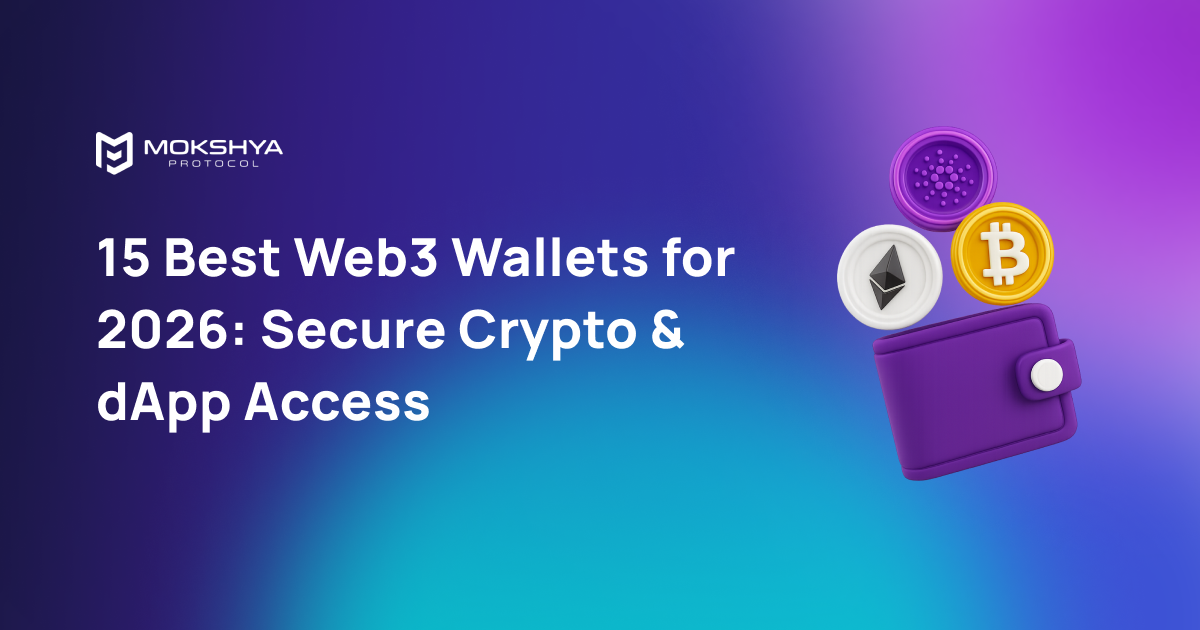
Web3 is changing how we interact with the internet, and at the center of this shift are Web3 wallets. Whether you’re trading crypto, exploring NFTs, or using decentralized applications (dApps), your wallet is your gateway to the blockchain world. Simply put, without a Web3 wallet, you can’t truly participate in Web3. A Web3 wallet is more than just a place to store digital assets—it’s your identity, your login, and your control center in the decentralized ecosystem. Think of it like a digital passport that lets you access different blockchain networks securely, sign transactions, and manage assets without relying on traditional banks or intermediaries.
In this guide, we’ll explore the 15 best Web3 wallets for 2026, what makes them stand out, and how to choose the one that best fits your needs.
What Is a Web3 Wallet?
A Web3 wallet is a digital tool that allows you to store, send, and receive cryptocurrencies while also giving you direct access to decentralized applications (dApps). Unlike traditional banking apps or centralized wallets, a Web3 wallet connects you directly to blockchain networks without needing any middleman. It acts as both your storage system for digital assets and your gateway to the entire Web3 ecosystem.
A Web3 wallet is like your personal identity on the blockchain. It doesn’t just hold your crypto; it gives you full control over it. With a Web3 wallet, you can sign transactions, interact with smart contracts, trade NFTs, use DeFi platforms, and manage assets across multiple blockchains. Everything you do is secured by cryptographic keys that only you control, making it one of the most important tools for anyone entering the world of Web3 and decentralized technology.
What Are the 15 Best WEB3 Wallets for 2026?
The 15 best web3 wallets for 2026 can completely change the experience in the blockchain world. From trading tokens and storing NFTs to interacting with DeFi platforms and dApps, your wallet is the foundation of everything you do in Web3. Below are the 15 best Web3 wallets for 2026, each offering unique features, security levels, and blockchain compatibility.
MetaMask
MetaMask is one of the most widely used Web3 wallets, especially in the Ethereum ecosystem. It works as both a browser extension and mobile app, allowing users to easily connect with thousands of decentralized applications. Its biggest strength is its massive ecosystem support, making it the default wallet for most DeFi platforms and NFT marketplaces. Beginners love its simplicity, while developers appreciate how easily it integrates with dApps.
Phantom
Phantom is a leading wallet built for the Solana blockchain. It is known for its speed, clean interface, and smooth user experience. Users can store SOL tokens, manage NFTs, and interact with Solana-based DeFi apps with very low transaction fees. Its built-in swap feature and NFT gallery make it especially popular among traders and collectors in the Solana ecosystem.
Trust Wallet
Trust Wallet is a mobile-first, multi-chain Web3 wallet that supports a wide range of cryptocurrencies and blockchains. It provides users with access to decentralized applications through its built-in Web3 browser. Its strong security features, ease of use, and wide asset support make it a go-to wallet for users who want everything in one place.
Coinbase Wallet
Coinbase Wallet is a self-custody wallet that gives users full control over their private keys. Unlike the Coinbase exchange, this wallet allows direct interaction with Web3 applications. It supports Ethereum, Solana, and other networks while also offering NFT storage and dApp access. Its connection to the Coinbase ecosystem adds an extra layer of trust for new users entering Web3.
Rabby Wallet
Rabby Wallet is designed with advanced users in mind, especially those who interact heavily with DeFi platforms. It automatically detects and switches networks, reducing the risk of manual errors. One of its standout features is transaction preview, which clearly shows what a smart contract will do before you approve it—helping users avoid malicious approvals and hidden risks.
Exodus
Exodus is known for its beautiful design and beginner-friendly interface. It supports a wide variety of cryptocurrencies and offers both desktop and mobile versions. Users can track their portfolio in real time and swap assets directly inside the wallet. It is a great choice for users who want a simple yet visually appealing crypto management experience.
Ledger Wallet
Ledger is a hardware wallet that stores private keys offline, making it one of the most secure options available. Since it is not connected to the internet, it is highly resistant to hacking attempts. Ledger is widely used for long-term storage of crypto assets and supports integration with multiple software wallets for Web3 access when needed.
Trezor Wallet
Trezor is another trusted hardware wallet that focuses heavily on security and transparency. It allows users to keep their private keys offline while still interacting with Web3 applications through compatible interfaces. Its open-source approach and strong security reputation make it a favorite among security-conscious users.
Safe
Safe is a multi-signature wallet designed for teams, DAOs, and organizations. It requires multiple approvals before executing transactions, adding an extra layer of protection for shared funds. This makes it ideal for managing treasury funds, business assets, and collaborative Web3 projects where security and accountability are critical.
OKX Wallet
OKX Wallet is a powerful multi-chain wallet that supports a wide range of blockchains and DeFi ecosystems. It allows users to store assets, access dApps, and trade tokens across multiple networks. Its integration with the OKX exchange ecosystem also provides additional liquidity and trading features for active users.
Keplr
Keplr is a specialized wallet built for the Cosmos ecosystem. It supports staking, governance participation, and cross-chain transfers within Cosmos-based blockchains. It is essential for users involved in Cosmos DeFi and those who want to actively participate in blockchain governance decisions.
XDEFI Wallet
XDEFI Wallet is designed for DeFi users who operate across multiple blockchains. It supports assets from Ethereum, Bitcoin, Solana, and more, allowing seamless cross-chain interactions. Its built-in swap features and portfolio tracking make it a powerful tool for active traders.
Backpack
Backpack is a modern Web3 wallet focused on the Solana ecosystem and beyond. It combines wallet functionality with NFTs, dApps, and identity features, creating a more immersive Web3 experience. Its clean interface and developer-friendly design make it popular among both users and builders.
Bitget Wallet
Bitget Wallet is a multi-chain wallet that supports DeFi, trading, and NFT management in one place. It is designed to be user-friendly while still offering advanced features for experienced traders. Its wide blockchain support makes it a flexible option for users who interact with multiple ecosystems.
Zerion Wallet
Zerion Wallet is a smart DeFi-focused wallet that aggregates assets across multiple chains into a single dashboard. It provides portfolio tracking, DeFi analytics, and seamless access to Web3 protocols. Its clean interface and data-driven insights make it ideal for users who actively manage diverse crypto portfolios.
Conclusion
Web3 wallets are essential tools for anyone looking to participate in the decentralized internet. They do much more than store cryptocurrencies; they provide access to dApps, NFTs, DeFi platforms, and blockchain ecosystems while giving users full control over their digital assets. With so many options available, choosing the right wallet depends on your security needs, preferred blockchain networks, and overall Web3 goals.
Mokshya Protocol supports the growth of the Web3 ecosystem by providing developers with open-source blockchain tools, smart contract libraries, SDKs, and infrastructure that simplify decentralized application development. As Web3 adoption continues to expand, combining reliable Web3 wallets with robust development platforms will help users and builders create more secure, scalable, and innovative blockchain experiences.